World Water Week 2026: 1001fontaines Calls
for a Rethinking of Universal Access to Safe Drinking Water
Back from Stockholm, the 1001fontaines team shares its reflections and key highlights from World Water Week 2026. Held under the theme “Water for People and Progress”, the event brought together leading stakeholders from across the sector. Pierre-André Térisse, Eva Leneveu, and Naïa Messié took part in discussions and co-hosted two sessions: one exploring the role of packaged water in achieving universal access to safe drinking water, and the other focusing on the resilience of water services in the face of climate change. Here are some of our key takeaways!
Session 1 – Packaged Drinking Water: Bridge or Barrier to SDG6?
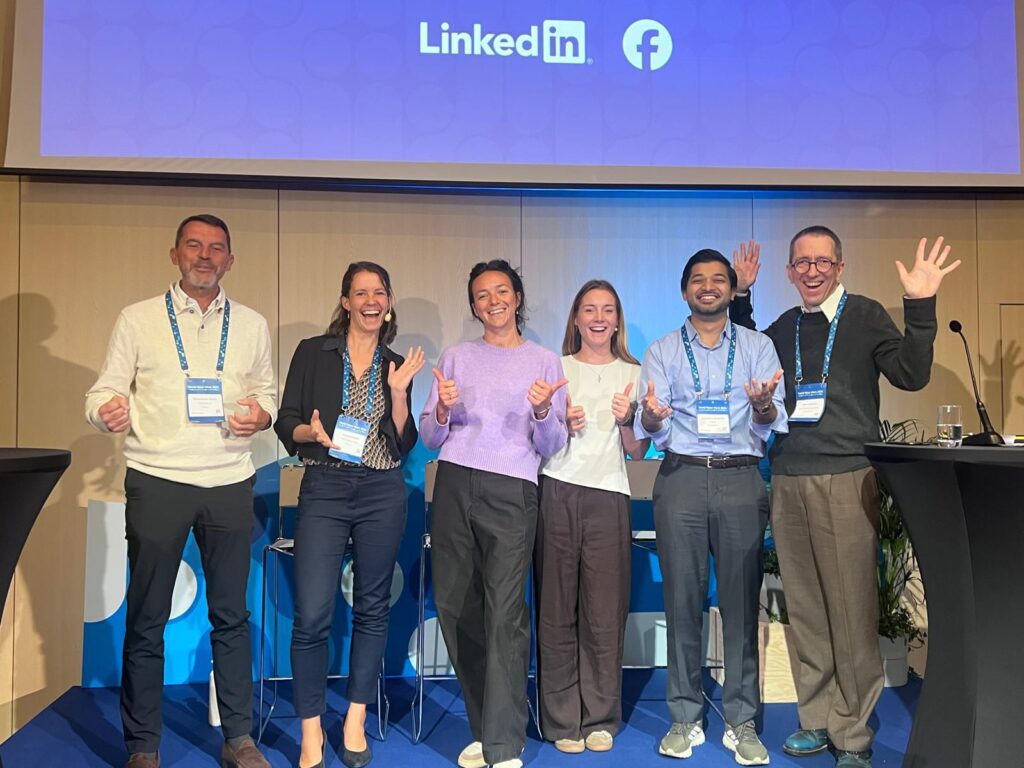
Zahid Shashoto and Rick Johnston
Organized in partnership with Aquaya Institute, our first session brought together a high-level panel including representatives from the Asian Development Bank (ADB) and the World Health Organization (WHO). This demonstrates that packaged water, long overlooked in sector discussions, is now receiving increasing attention from major institutions.
And it is for good reason! Millions of people already drink bottled or sachet water, with particularly strong growth in low- and middle-income countries.
In urban areas, consumers often turn to packaged water because intermittent piped-water networks do not consistently meet their expectations in terms of quality and convenience. In rural areas, it primarily serves as an alternative where adequate infrastructure is unavailable. Data from the Joint Monitoring Programme (JMP) further confirms that this choice is not without foundations: among all drinking water sources, packaged water consistently offers the highest level of quality.
Acknowledging this reality also means addressing the concerns associated with it. These include its plastic footprint, its affordability for the most vulnerable populations, and the risk that it could divert public authorities’ attention from their responsibility to develop the infrastructure needed to achieve universal access to safe drinking water. Rather than avoiding these challenges, we chose to address them directly during our session by presenting the practical and sustainable alternatives that we are developing with our partners on the ground: Teuk Saat 1001 in Cambodia and Uttaran Paani in Bangladesh, joined by Spring Health, which operates a similar model in India. These services rely on refillable 20-liter bottles and follow a circular approach, combining home delivery with affordable pricing to reach rural areas, including the most vulnerable populations. In Cambodia, for example, households in the lowest income group account for 16% of Teuk Saat 1001’s customers, a share close to their proportion at the national level estimated at 18% (Consumer Survey Cambodia, 2024).
The session concluded with a call to take the research further, including on cost-effectiveness comparisons with other distribution models, governance, regulation, and environmental sustainability.
Naïa Messié, Zahid Shashoto and Rick Johnston
And it is for good reason! Millions of people already drink bottled or sachet water, with particularly strong growth in low- and middle-income countries. In urban areas, consumers often turn to packaged water because intermittent piped-water networks do not consistently meet their expectations in terms of quality and convenience. In rural areas, it primarily serves as an alternative where adequate infrastructure is unavailable. Data from the Joint Monitoring Programme (JMP) further confirms that this choice is not without foundations: among all drinking water sources, packaged water consistently offers the highest level of quality.
Acknowledging this reality also means addressing the concerns associated with it. These include its plastic footprint, its affordability for the most vulnerable populations, and the risk that it could divert public authorities’ attention from their responsibility to develop the infrastructure needed to achieve universal access to safe drinking water. Rather than avoiding these challenges, we chose to address them directly during our session by presenting the practical and sustainable alternatives that we are developing with our partners on the ground: Teuk Saat 1001 in Cambodia and Uttaran Paani in Bangladesh, joined by Spring Health, which operates a similar model in India. These services rely on refillable 20-liter bottles and follow a circular approach, combining home delivery with affordable pricing to reach rural areas, including the most vulnerable populations. In Cambodia, for example, households in the lowest income group account for 16% of Teuk Saat 1001’s customers, a share close to their proportion at the national level estimated at 18% (Consumer Survey Cambodia, 2024).
The session concluded with a call to take the research further, including cost-effectiveness comparisons with other distribution models, governance, regulation, and environmental sustainability.
Zahid Shashoto and Rick Johnston
Organized in partnership with Aquaya Institute, our first session brought together a high-level panel including representatives from the Asian Development Bank (ADB) and the World Health Organization (WHO). This demonstrates that packaged water, long overlooked in sector discussions, is now receiving increasing attention from major institutions.
And it is for good reason! Millions of people already drink bottled or sachet water, with particularly strong growth in low- and middle-income countries. In urban areas, consumers often turn to packaged water because intermittent piped-water networks do not consistently meet their expectations in terms of quality and convenience. In rural areas, it primarily serves as an alternative where adequate infrastructure is unavailable. Data from the Joint Monitoring Programme (JMP) further confirms that this choice is not without foundations: among all drinking water sources, packaged water consistently offers the highest level of quality.
Acknowledging this reality also means addressing the concerns associated with it. These include its plastic footprint, its affordability for the most vulnerable populations, and the risk that it could divert public authorities’ attention from their responsibility to develop the infrastructure needed to achieve universal access to safe drinking water. Rather than avoiding these challenges, we chose to address them directly during our session by presenting the practical and sustainable alternatives that we are developing with our partners on the ground: Teuk Saat 1001 in Cambodia and Uttaran Paani in Bangladesh, joined by Spring Health, which operates a similar model in India. These services rely on refillable 20-liter bottles and follow a circular approach, combining home delivery with affordable pricing to reach rural areas, including the most vulnerable populations. In Cambodia, for example, households in the lowest income group account for 16% of Teuk Saat 1001’s customers, a share close to their proportion at the national level estimated at 18% (Consumer Survey Cambodia, 2024).
The session concluded with a call to take the research further, including on cost-effectiveness comparisons with other distribution models, governance, regulation, and environmental sustainability.
Session 2 – Building climate-resilient water services
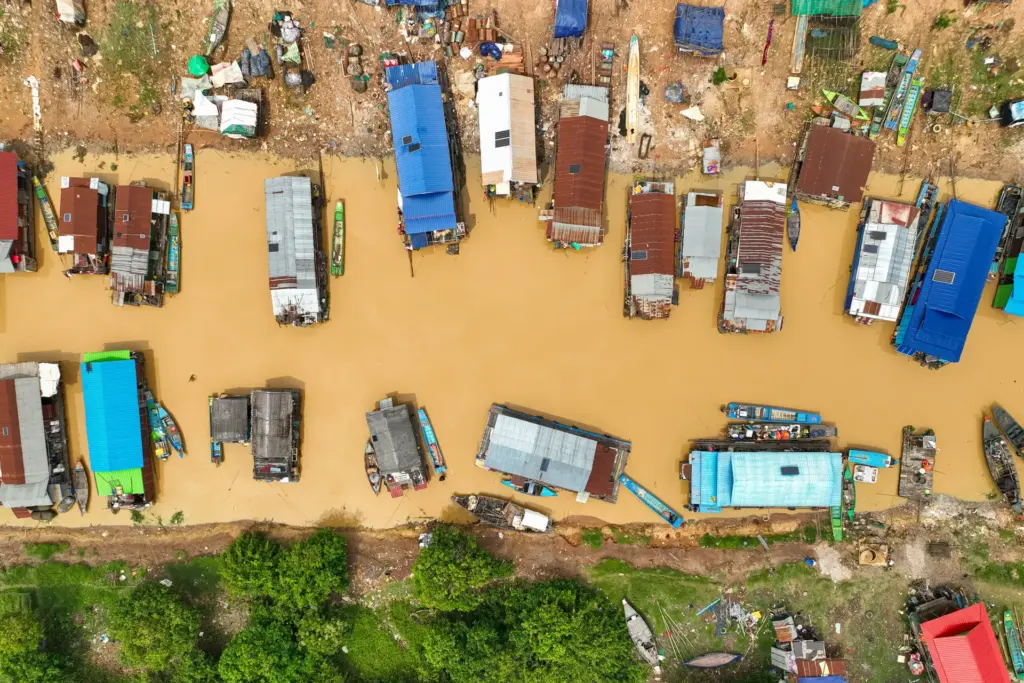
Moving beyond a purely reactive approach requires a better understanding of the risks faced by water services. This was the purpose of our first Climate Risk Assessment (CRA) that we presented during our session. Conducted in Cambodia with the Institute for Sustainable Futures (UTS), the assessment combines years of operational data from Teuk Saat 1001 with climate projections to identify, kiosk by kiosk, the sites most exposed to climate-related risk. Far from being just another report, this analysis is already informing our investment decisions and our research and development efforts.
One question, however, remained at the heart of the discussion: how can climate adaptation be financed in a sector that is already severely underfunded? Funders like Aqua for All are helping to pave the way by providing direct support to operators. Yet a significant gap remains: on one side, climate funds generally operate through large-scale financing mechanisms, while drinking-water services have so far received limited support. At the same time, adaptation needs are often fragmented and carried by a multitude of small-scale operators.
In the future, this work should help improve needs assessments and support more effective prioritization of adaptation measures. However, for water-service operators, the effects of climate change are already very real: floods, droughts, and declining water quality are already affecting their operations and the communities they serve.
Moving beyond a purely reactive approach requires a better understanding of the risks faced by water services. This was the purpose of our first Climate Risk Assessment (CRA) that we presented during our session. Conducted in Cambodia with the Institute for Sustainable Futures (UTS), the assessment combines years of operational data from Teuk Saat 1001 with climate projections to identify, kiosk by kiosk, the sites most exposed to climate-related risk. Far from being just another report, this analysis is already informing our investment decisions and our research and development efforts.
One question, however, remained at the heart of the discussion: how can climate adaptation be financed in a sector that is already severely underfunded? Funders like Aqua for All are helping to pave the way by providing direct support to operators. Yet a significant gap remains: on one side, climate funds generally operate through large-scale financing mechanisms, while drinking-water services have so far received limited support. At the same time, adaptation needs are often fragmented and carried by a multitude of small-scale operators.
Our second session focused on climate resilience, a topic that is becoming increasingly important across the WASH sector. While the indicators used to measure it are still being developed, the WHO shared promising progress in this area during our roundtable. In the future, this work should help improve needs assessments and support more effective prioritization of adaptation measures. However, for water-service operators, the effects of climate change are already very real: floods, droughts, and declining water quality are already affecting their operations and the communities they serve.
Moving beyond a purely reactive approach requires a better understanding of the risks faced by water services. This was the purpose of our first Climate Risk Assessment (CRA) that we presented during our session. Conducted in Cambodia with the Institute for Sustainable Futures (UTS), the assessment combines years of operational data from Teuk Saat 1001 with climate projections to identify, kiosk by kiosk, the sites most exposed to climate-related risk. Far from being just another report, this analysis is already informing our investment decisions and our research and development efforts.
One question, however, remained at the heart of the discussion: how can climate adaptation be financed in a sector that is already severely underfunded? Funders like Aqua for All are helping to pave the way by providing direct support to operators. Yet a significant gap remains: on one side, climate funds generally operate through large-scale financing mechanisms, while drinking-water services have so far received limited support. At the same time, adaptation needs are often fragmented and carried by a multitude of small-scale operators.
Conclusion
Across both sessions, the role of governments emerged as a central topic. When it comes to packaged water, governments are responsible for setting quality standards, regulating prices, and determining how these services are recognized within national strategies for access to safe drinking water. On climate resilience, they play a key role in infrastructure planning and remain the main channel through which climate finance is allocated.
Yet our services are not currently integrated into public policies to the extent required. Making this a reality will therefore be one of our key priorities in the years ahead: documenting what works on the ground and working with governments to ensure these services are fully recognized within national water-access strategies.
👉 Funders, institutions, operators, researchers, if these questions are also important to you, let us connect!
Pierre-André Térisse, CEO, and Eva Leneveu, Programs Director